
Event Space "Near Me" in NYC: How to Search by Where Your Guests Are, Not Where You Are
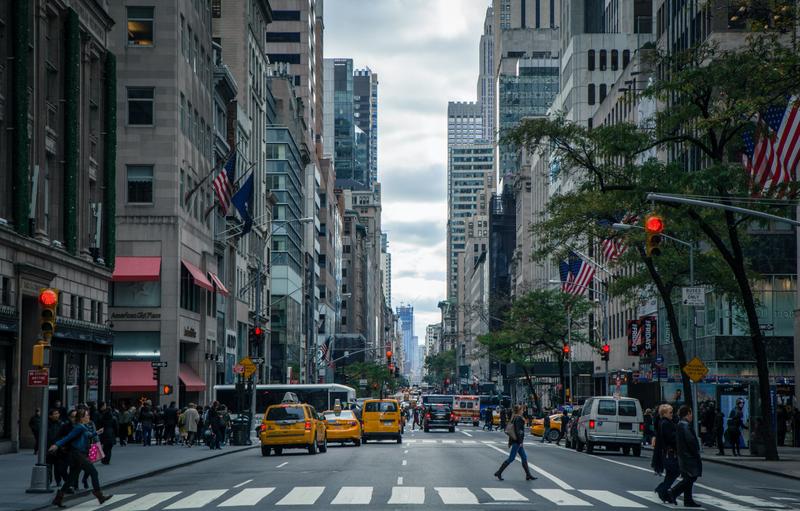
“Event space near me” finds the room nearest your phone, which is the one address at the party that does not matter. Search instead from where the guests begin: pick the neighborhood on the venues search, then the headcount, then the type, and leave price for last. As of 2026-11-25 the catalog holds 266 listings across 33 Manhattan neighborhoods and 17 in Brooklyn, so the choice is real.
Why “near me” is the wrong question for a group
A search engine takes “near me” literally and answers with your own block. A party of forty has forty blocks. The question that finds a room is not where you are standing but where the evening can start for everyone at once, and that is a neighborhood, not a radius. The catalog is built the same way: the search box reads “Search by name or neighborhood,” the filter drawer has a Neighborhood panel and a Borough panel, and every filter you apply is written into the address bar, so the search survives a refresh and can be sent to whoever is helping you decide. Manhattan holds 194 of the 266 listings as of 2026-11-25, Brooklyn 53 and Queens 12; the neighborhood pages, 20 of them, are the short list already made.
Step 1: the neighborhood where most guests start
Write down where the guests leave from at six o’clock, not where they live. An office party starts at the office; a birthday starts wherever the group drinks on a Thursday. Then open the search, type that neighborhood into the box or choose it in the drawer, and read the count before anything else. As of 2026-11-25 the Flatiron District returns 18 listings, Williamsburg 6 and Midtown East 6. A neighborhood with 6 rooms is a decision; one with 18 is a search. If the count comes back under five, widen to the borough with the toolbar’s Borough control and let the map do the geography.
Step 2: guest count and type before price
The drawer opens on guests for a reason. Its control is a stepper labelled “At least,” with a short list of common sizes, and it is the filter that removes the largest share of rooms with the least regret, since capacity is the one number a host does not negotiate. Set it to your count, not your hope. Next, the type: the Type of event panel (a party, a corporate event, a production, a meetup) and the Venue type panel (loft, bar and lounge, event venue and the rest) narrow by what the room is for. Price comes last because price per hour is the number that misleads earliest; a $200 loft with a ten-hour minimum costs more than a $500 bar for three. Set the Price per hour range only once the other filters have made the list short enough to read.
| Filter, in order | Where it lives | What it does for a group |
|---|---|---|
| Neighborhood or Borough | search box, toolbar, drawer | puts the room where the evening starts |
| Guests (“At least”) | drawer, first panel | removes every room too small, no judgment needed |
| Type of event, Venue type | drawer | matches the room to the occasion |
| Price per hour | toolbar, drawer | ranks what is left; read it against minimum hours |
| Sort | toolbar | price or capacity, either direction |
Step 3: the map, and the one-stop rule
The map is a button in the toolbar, not the default view, and it opens beside the results. Two things to know before you drag it. Pins are placed approximately, so a pin is a block, not a doorstep. And moving the frame re-runs the search for whatever is now inside it, so a drag is a new filter, not a closer look at the old one. Use it for the one-stop rule: a mixed guest list wants a neighborhood each half can reach in one train, and the landing pages say which. Williamsburg’s page puts it one stop on the L from Union Square; the Flatiron District’s says almost every subway line is a short walk; Midtown East’s names Grand Central for anyone commuting in from Westchester, Connecticut or Long Island. Our Union Square guide works the Manhattan half of that rule in detail.
A worked search: half Midtown, half Brooklyn
Sixty guests, thirty leaving a Midtown office and thirty coming from Brooklyn, a Thursday in winter. Start in the drawer with Guests at least 60, Type of event set to Party, and no price. Then try the two neighborhoods the one-stop rule proposes. Williamsburg, one L stop past Union Square for the Manhattan half and home ground for the other, holds 6 listings as of 2026-11-25, and 5 of them clear 60: two bars and lounges, a restaurant, an event venue and a retail space, listing $50 to $2,000 an hour. The Flatiron District, where the lines converge for the Brooklyn half and the Midtown half walks, holds 18, 17 of them for 60 or more, at $200 to $2,000 an hour, ten of them event lofts. Williamsburg is the cheaper list and the shorter one; Flatiron is the longer list and the one nobody has to cross a river for. Open the map, confirm the pins sit near the stations you expect, then sort by price and read the minimum hours on each card before you inquire.
FAQ
How do I find event space near me in NYC?
Replace “me” with the neighborhood your guests leave from, type it into the search box on the venues page or pick it in the Neighborhood panel, then set the guest count. The search keeps its filters in the address bar, so the results can be shared and will survive a refresh. As of 2026-11-25 the catalog holds 266 listings, 194 of them in Manhattan.
Which NYC neighborhood is central for a mixed guest list?
For a list split between Manhattan and Brooklyn, the landing pages point to two: Williamsburg, one L stop from Union Square, and the Flatiron District, where almost every subway line is a short walk. For a list arriving by commuter rail, Midtown East’s page names Grand Central. As of 2026-11-25 the three hold 6, 18 and 6 listings.
Can I search venues by subway line?
No. The filters are neighborhood, borough, guests, price per hour, size, type of event, venue type, amenities and rules, plus a text box and a map; there is no train-line filter. The neighborhood pages carry the lines in their copy, and the map shows where the pins fall relative to the stations you know.
Open the search, put the neighborhood first and the headcount second, and leave the price for the moment the list is short enough to argue about.